Private Namibia Safari

Namibia is the most unique of all African countries. It is one of the most sparsely populated countries in the world, famous for its stark beauty, where towering dunes meet a tempestuous coastline and where abundant wildlife still roam. We can create a fully customized, private Namibia safari for you and your family or friends in Africa’s best-kept safari destination secret.

Namibia has some rare national parks, the most well known of these is Etosha National Park in the north. Plains game such as zebra, wildebeest, giraffe, springbok, impala and eland abound in great numbers on the grasslands and congregate at waterholes here. Herds of fifty elephants are not unusual and often walk right down the middle of the road giving people in cars an incredibly close and thrilling encounter.

It is a country with vast, diverse habitats and exceptional game viewing. As a geologist’s and naturalist’s paradise, it lays claim to one of the most spectacular desert ecosystems in the world. Namibia is situated in the sub-tropics and flanked by the cold Atlantic Ocean. The cold Benguella current, which drifts northward from Antarctica has a massive influence on the climate causing cool, dry air to push inland, resulting in a temperate coastline and the extreme desert conditions of the Namib.

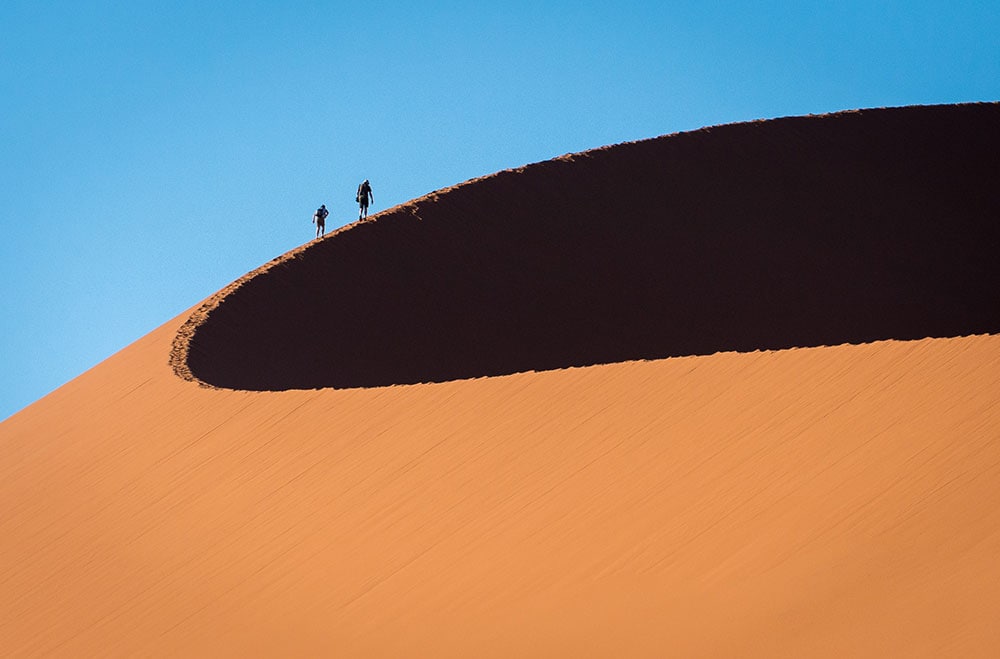
A visit to Namibia would not be complete without venturing into the Namib-Naukluft National Park. It is one of the largest conservation areas in the world at 19,305 square miles. If not on foot or vehicle then take a light aircraft or hot air balloon, for the best view you will ever get of an endless rippling desert of red sand. In the south, there is the little known but equally mystifying Fish River Canyon Reserve, a canyon second in size only to the Grand Canyon in the U.S.

The Kalahari Desert straddles Botswana and Namibia. A Kalahari Desert safari offers a truly off-the-beaten-path experience. The Kalahari Plains are home to the black-maned lion and some of the best cheetah viewing in the world, particularly in the summer months when huge herds of springbok, oryx and wildebeest attract predators from all corners of the desert.

In the north is the Skeleton Coast National Park – Ghostly shipwrecks on remote and inaccessible shores has given the Skeleton Coast its’ well-deserved name. This 2 million-hectare (20,000 km) park is one of the most inhospitable and least visited places on earth that protect unique desert ecosystems. Desert elephants have been seen in the interior of the Park surfing down sand dunes like snow-boarders. Desert dwelling oryx are completely at home in such dry conditions. Springbok, giraffe, brown hyena, ostrich, rare black rhino and even lion are found inland where riverine bush supports the grazers and freshwater can usually be found. Don’t miss the Cape Frio seal colonies where you will likely see several thousand Cape fur seals. Whales and dolphins swim this coast on their way to and from breeding grounds. Immense whale skeletons are sometimes seen washed up on the sands.

The attraction for visitors to this park is its untouched and mysterious barren beauty, swept by cold sea breezes and often enveloped in a dense fog. The far-ranging sea mist creeps great distances inland and gives life to a singular unique ecosystem and most unusual plants. By mid-morning the mist has cleared and the timeless beauty of the Skeleton Coast is revealed. Such isolation as is found here, is not the usual domain for humans, but those that visit are privilege to one of the few places on earth where you can experience fearless solitude and become attuned to ocean echoes and desert silence.

namibia custom safari africa

namibia 4x4 adventure safari

luxury hotel namibia safari

namibia safari beach

The country holds the largest free-roaming population of cheetahs in the world, with one-quarter of the world’s cheetah population stalking the arid plains. Animals such as gemsbok (Oryx), springbok, bat eared fox, ostrich and black backed jackal are all seen on a regular basis making a Namibia safari different than any other wildlife country in Africa. As it should be in a land of such contrasts, Namibia offers an endless variety of safari options.

Climate in Namibia

May to November is the best time to visit Namibia, as the days are clear and warm but cool in the morning and evenings.

Suggested Customized, Private Namibia Safari Activities

  • Experience the haunting silence of the Kalahari Desert and spot one of 430 bird species in the Caprivi region
  • Search for desert elephants in Damaraland
  • Interact with the unique Himba community in the remote Kaokoveld
  • Experience some of the best game viewing in Namibia in Etosha National Park
  • Visit the Fish River Canyon and take advantage of the most exquisite photographic opportunities
  • Take a scenic flight over the stark but beautiful Namib desert and Skeleton Coast
  • Explore the foaming waves, rocks and seal colonies of the desolate Skeleton Coast
  • Surf down the worlds tallest sand dunes in Sossusvlei in the central Namiba
  • Discover Namibia on a self-driven safari through the Northwest in Damaraland and Kaokoveld, a route inspiring you with endless landscapes, beaches, nature, African tribes and culture

Namibia Trip Ideas - Sample Safari Itineraries

The Best of Namibia Safari

The Best of Namibia Safari

Ultimate Namibia Safari

Ultimate Namibia Safari

charles-williams-and-sarah-fernandes-safari-experts

Our family has been completely immersed in African wildlife conservation and safari planning since 1962. We offer unmatched expertise, knowledge and experience. Contact us today to plan your private, fully customized Botswana safari.

Plan Your Dream Safari Now

Namibia Safari FAQs

Namibia is unique for several reasons:

  • Vast, dramatic landscapes: deserts (including the Namib – one of the world’s oldest deserts), giant dunes (Sossusvlei), rugged escarpments, salt pans, and canyons (like Fish River Canyon).
  • Sparse population and wide-open spaces give a sense of remoteness and solitude.
  • Spectacular variety of wildlife in differing habitats—not just big game, but desert adapted species, abundant birdlife, and unique flora (for example the Welwitschia).
  • Good road infrastructure relative to many wilderness destinations; many safari combinations and itineraries.
  • Well-developed tourism sector with a mix of luxury lodges, mid-range, and more rustic camps ensuring options for many travel styles.

Timing depends on what you want to see and experience. Key periods:

Time of Year Conditions & Highlights
Dry / “Winter” season (May – October, especially July-October) Very good wildlife viewing (animals congregate around permanent waterholes), clear skies, little to no rainfall. Frequent choice for safari, as conditions are more predictable.
Shoulder periods (April & November) Transition seasons—landscape can be green, skies clearer, fewer tourists. Some have rains but less intense.
Wet / Green season (November – March / April) Afternoon thunderstorms, lush scenery, babies in the wild, excellent birding. However, animals more dispersed, some roads may be harder to traverse.

Also note desert areas can get very cold at night during the dry season, especially June-August.

Here are some of Namibia’s highlights and suggested time:

Region / Park Key Attractions Suggested Stay
Etosha National Park Classic big game viewing, permanent waterholes, excellent dry season action. 2-4 nights minimum; 5+ nights give time to visit more remote parts, slower pace.
Namib Desert / Namib-Naukluft / Sossusvlei & Sesriem Dramatic dunes, dune-sunrise photography, desert landscapes, sand dunes, salt pans. 2-3 nights minimum; more time if you want to explore dunes, canyon hikes, star photography.
Skeleton Coast Remote shorelines, shipwrecks, seal colonies, desert meets sea aesthetic. 2 nights unless combining with coastal or desert itineraries.
Damaraland Desert adapted wildlife (elephants, rhinos, etc.), rock art, geological formations. 2-3 nights depending on access.
Caprivi / Zambezi / Kavango / Floodplain Regions Wetlands, riverine wildlife, birding, boat / mokoro cruises, lush contrast to deserts. 2-3 nights or more, especially in wetter months.
Fish River Canyon / Southern Namibia Hiking, views, stark landscapes, remote southern desert/scrub areas. 2 nights if just views; more if hiking.
  • Luxury lodges / high-end tented camps: Very comfortable, often with excellent service, guides, gourmet food, amenities like pools, sometimes spas. Good for those seeking comfort.
  • Mid-range lodges / camps: Balances comfort and cost, often rustic elegance, good meals, good guides.
  • Remote camps / rustic (sometimes seasonal): May have more basic facilities, sometimes solar power, more isolated, fewer guests. These are great for those seeking solitude, photography, wilderness.

Remote areas may require small charter flights or long drives on dirt roads. Expect slower pace, less infrastructure.

  • Big game: elephants, lions, leopards, rhinos (in certain conservancies), giraffes, zebras, various antelope. Etosha in particular is rich for classic safari wildlife.
  • Desert-adapted species: e.g. oryx (gemsbok), springbok, desert elephants, some rare predators.
  • Bird life: Especially in floodplains, wetlands (Caprivi, Kavango, Zambezi), also migratory birds.
  • Unique flora: Welwitschia, unusual succulents, plants adapted to arid conditions.
  • Geological / scenic features: towering red dunes at Sossusvlei, sweeping desert vistas, the Namib Coastal fog belt, canyons, salt pans, rocky outcrops, ancient rock art in Damaraland.

Costs vary substantially depending on choices. Key cost drivers include:

  • Level of accommodation (luxury vs moderate)
  • Access / remoteness (fly-in camps vs road reachable)
  • Number of nights & distance between camps (higher transport costs in remote areas)
  • Time of booking & season (peak dry season tends to be more expensive)
  • Inclusions (meals, park fees, guides, transfers)
  • Whether solo travel, private vehicle or shared.

Namibia is often considered more affordable than many other African safari destinations, especially for mid-range travel, because of fewer lodges and less crowding, though remote lodges or fly-ins can become expensive. Expect to pay approximately $1,200 per person per night for moderate accommodations and $1,400 for luxury accommodations.

  • Visa & Entry Requirements: Passport with at least six months validity; visa requirements depend on nationality — check in advance.
  • Health: Some risk of malaria in wetter northern zones; vaccinations per travel clinic advisement. Bring insect repellent, etc. Also, in very remote areas, medical facilities are basic.
  • Safety: Namibia is relatively safe compared to many parts of Africa. That said, wildlife remains wild—follow safari guide instructions, avoid approaching animals, stay in vehicle where required.
  • Transport / Access: Many roads are gravel/dirt; in remote regions a 4×4 vehicle is often necessary. Flights (chartered or scheduled) may be used to reach remote camps. Plan for transit time between locations.
  • Communication / Connectivity / Amenities: Many remote lodges have limited connectivity, sometimes solar or generator power, intermittent internet. Bring backups (battery banks, etc.).
  • Families: Yes—many lodges are family-friendly. But remote camps or long drives may be challenging. Children’s ages and lodge policies vary.
  • Solo Travelers: Yes – Namibia’s safety, welcoming people, and structured lodges make it a good choice for solo travelers.
  • Photographers: Excellent. Light, sweeping landscapes, contrast (desert, dune, water, animals by waterholes), dramatic skies, particularly in the dry season. Also good during green season for lush landscapes and new life.
  • Adventure / Ecotourism / Culture Enthusiasts: Great options—walking safaris, cultural interactions, desert hikes, or exploring ancient rock art, indigenous communities.

Here are typical combinations:

  • Classic safari + desert: Windhoek → Etosha → Damaraland → Sossusvlei / Namib Desert → Swakopmund → coastal regions.
  • Desert & coast: Focus on dunes, skeleton coast, possibly shipwrecks, seal colonies, fog coast, etc.
  • Northern wetlands & rivers: Visiting Caprivi / Kavango / Zambezi regions for water-based wildlife, rivers, birding.
  • Southern highlights / hiking: Fish River Canyon, southern deserts.
  • Photography trip: Spend longer in fewer regions; plan for sunrise/sunset shoots; perhaps include coastal fog, dunes, wildlife at waterholes.

Typically, itineraries run from about 7 to 14 days depending on how much travel between regions you want to do.

  • Respect local cultures and communities; Namibia has diverse ethnic groups with their own customs.
  • Wildlife and nature protection: stick to park rules, maintain respectful distances, follow guide instructions. Do not disturb habitats.
  • Leave no trace: especially in remote wilderness, carry out what you carry in, minimize waste.
  • Responsible photography: avoid disturbing animals; avoid flash in certain contexts; respect local privacy.
  • International arrival points: Windhoek is the main gateway; there are international flights into Hosea Kutako International Airport. Some itineraries might enter via neighboring countries depending on overland routes.
  • Internal transport: Mixture of road travel (paved & unpaved roads), 4×4 drives, sometimes charter flights especially to remote lodges. Distances in Namibia are large; expect long drives between regions.
  • Permits & entrance fees: National park entrance fees, sometimes permit fees for certain routes/trails. Some areas are under private reserves or conservancies.
  • Visas & entry requirements: Depends on nationality; always check up to date. Passport validity often six months. Sometimes you must show proof of accommodations.
  • Currency: Namibian Dollar (NAD) is used; South African Rand is widely accepted. Credit cards accepted in many lodges/towns; cash useful in rural/remote areas.
  • Electricity & plugs: Namibia uses plug Types D and M generally. Power supply in remote camps may be via solar or generator; bring adaptors and backup charging.
  • Communications: Cell phone coverage good in towns; remote areas may have limited or no signal. Internet is spotty in remote lodges.
  • Tipping culture: Expected in lodges / camps for guides, trackers, lodge staff. Policy may vary; find out what is customary or built into cost.